
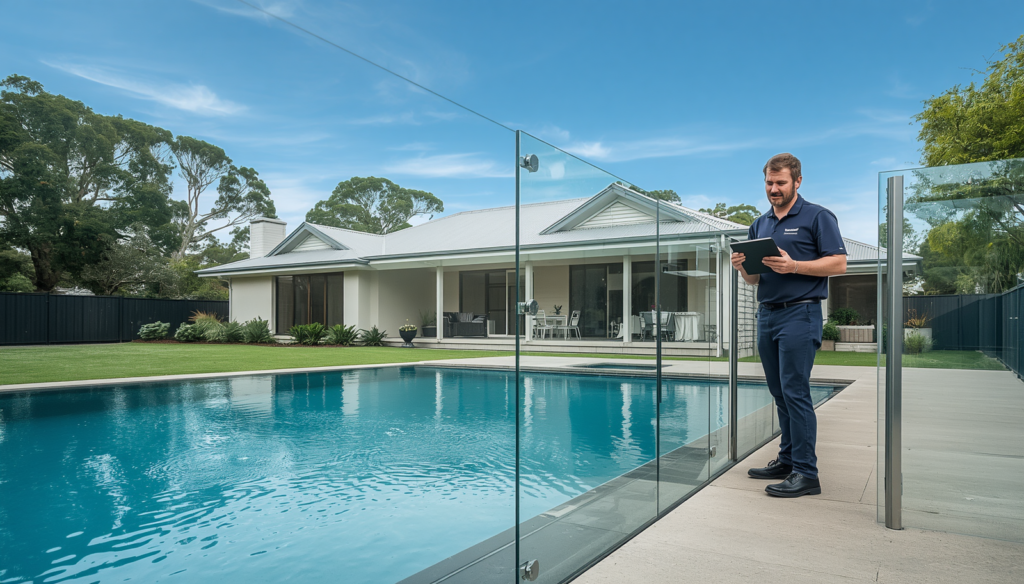
If you own a swimming pool or spa in Victoria, keeping your barrier compliant isn’t just about meeting legal requirements, it’s about protecting the people who use it every day.
One of the most common questions pool owners ask is:
“How often does my pool barrier need to be inspected?”
The short answer is every four years. However, there’s more to the process than simply booking an inspection, and understanding what’s required can help you avoid unnecessary stress and last-minute surprises.
Why Are Regular Pool Barrier Inspections Required?
Victoria introduced mandatory pool and spa barrier inspections to improve safety and reduce the risk of accidental drownings.
Over time, gates can stop self-closing correctly, latches may wear, fences can shift, and landscaping can unintentionally create climbable access. Even a barrier that was compliant a few years ago may no longer meet the required standard today.
That’s why regular inspections are required—to ensure your barrier continues to provide effective protection.
How Often Do You Need an Inspection?
For most residential pools and spas in Victoria, a pool barrier inspection is required every four years.
After your inspection has been completed and your barrier complies with the applicable Australian Standard, you’ll receive a Form 23 – Certificate of Barrier Compliance. This certificate must then be lodged with your local council by the required due date.
What Happens During the Inspection?
A registered Pool Barrier Inspector will assess your safety barrier against the applicable Australian Standard.
The inspection typically includes checking:
- Gates self-close and self-latch correctly
- Fence height and required clearances
- Gaps beneath and between barrier components
- Climbable objects located near the barrier
- General condition of fencing, gates and hardware
Once the inspection is complete, you’ll receive a written report outlining the outcome.
What If My Pool Barrier Doesn’t Meet the Standard?
If your barrier doesn’t comply, there’s no need to panic.
You’ll receive a detailed report explaining exactly what needs attention. In many cases, the required rectifications are straightforward and can be completed without major work.
After the issues have been addressed, the barrier is inspected again. Once it meets the required standard, your Form 23 Certificate can be issued.
When Should You Book Your Inspection?
Many pool owners wait until their council deadline is approaching.
A better approach is to arrange your inspection well before your due date. This gives you time to complete any required rectification work without unnecessary pressure.
Booking early also makes it easier to secure an appointment that suits your schedule.
Simple Things You Can Check Before the Inspection
While only a registered inspector can determine compliance, it’s worth taking a few minutes to check:
- Does the gate close by itself from any open position?
- Does the latch engage properly every time?
- Are there any pots, furniture or trees that could be used to climb over the fence?
- Is the barrier free from damage or loose components?
- Are the required clearances still maintained around the barrier?
Addressing small maintenance issues early can make the inspection process much smoother.
Why Working With a Registered Inspector Matters
A registered Pool Barrier Inspector understands the applicable Australian Standards and Victorian legislative requirements.
Rather than simply identifying issues, an experienced inspector will explain the findings clearly, answer your questions and help you understand what needs to be done before certification.
This makes the compliance process more straightforward and gives you confidence that your barrier has been assessed correctly.
Final Thoughts
Pool barrier inspections are required every four years in Victoria, but staying compliant shouldn’t feel complicated.
By arranging your inspection early, maintaining your barrier throughout the year and working with a registered inspector, you’ll be well prepared when it’s time to lodge your Certificate of Barrier Compliance.
Keeping your barrier compliant isn’t only about meeting council requirements—it’s about helping to maintain a safer environment for your family, visitors and anyone using your pool.
Ready to Book Your Inspection?
If your inspection due date is approaching, now is a good time to arrange your appointment.
Our inspections include a detailed report, practical guidance and the issuance of your Form 23 Certificate once your pool barrier meets the required standard.