
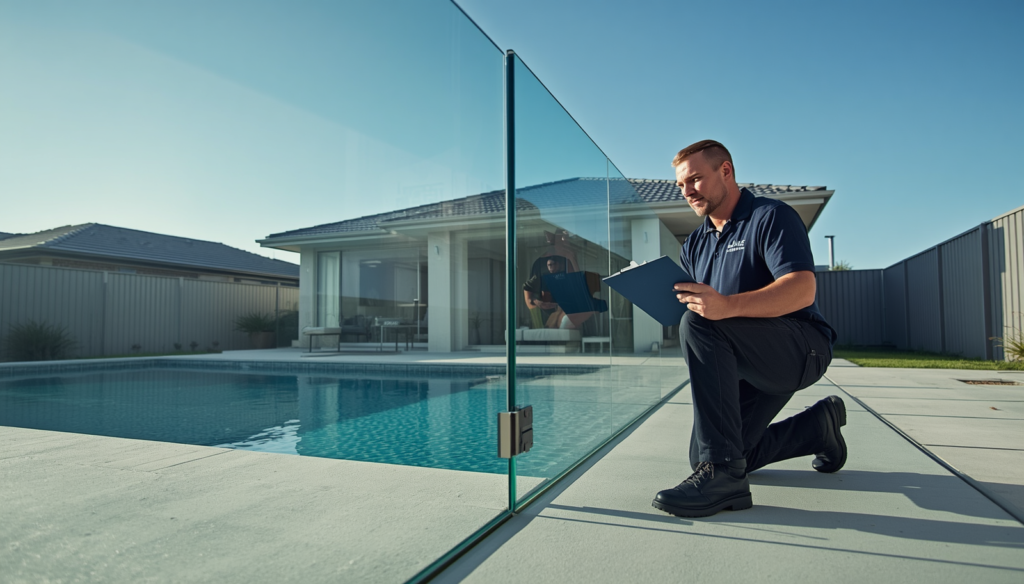
If you’ve recently had your pool barrier inspected and it didn’t meet the required standard, you’re not alone.
Many Victorian pool owners are surprised to learn that small maintenance issues or overlooked safety hazards can result in a non-compliant inspection outcome. The good news is that a failed pool barrier inspection doesn’t necessarily mean major repairs or expensive renovations.
In most cases, you’ll receive a clear report explaining exactly what needs to be addressed before your barrier can be certified.
This guide explains what happens next and how you can move through the compliance process with confidence.
Why Do Pool Barriers Fail an Inspection?
Pool barriers are assessed against the applicable Australian Standard and Pat 9a Division 2 of the Building Regulations 2018 depending on the date of construction of your pool / spa.
Even if your barrier was compliant when it was first installed, or the last time it was inspection under the new building regulations four yearly inspection cycle, normal wear and tear, landscaping changes or ageing hardware can affect compliance over time.
The purpose of the inspection isn’t to catch people out—it’s to ensure your pool barrier continues to provide an effective level of safety for children under 5 and meets the legislative requirements Building Regulations 2018.
What Happens After a Failed Inspection?
If your pool barrier doesn’t comply, your inspector will provide you with a detailed inspection report.
Rather than simply advising that the barrier has failed, the report explains:
- Which items are non-compliant
- Why they don’t meet the required standard
- What needs to be rectified before certification can be issued
This allows you to clearly understand the work required before arranging the next inspection, which will need to occur within 60 days.
Common Reasons Pool Barriers Fail
While every property is different, pool inspectors commonly identify issues such as:
- Gates & Doors that don’t self-close or self-latch correctly
- Climbable objects positioned too close to the barrier
- Exposed fence rails abutting a barrier that at not 900 mm apart
- Gaps that exceed the permitted 100mm limits
- Damaged or loose fencing components
Many of these issues can be corrected without replacing the entire fence.
Do You Need to Replace Your Entire Pool Fence?
Not usually.
A failed inspection doesn’t automatically mean you need a brand-new pool barrier.
In many cases, compliance can be achieved by carrying out relatively straightforward minor maintenance / repairs or replacing individual fencing components.
The inspection report will outline exactly what needs attention, helping you avoid unnecessary work.
Making the Required Rectifications
Once you’ve reviewed your inspection report, you can arrange for the recommended rectification work to be completed.
Depending on the issue, this may involve:
- Adjusting gate hinges
- Replacing faulty latches
- Removing climbable objects
- Repairing damaged fencing
- Correcting barrier clearances
Completing these items before your next inspection helps streamline the certification process.
What Happens Next?
After the required work has been completed, your pool barrier is inspected again.
If the barrier now complies with the applicable Australian Standard, your inspector can issue a Form 23 – Certificate of Barrier Compliance, which can then be lodged with your local council as required.
The process is designed to ensure your barrier meets the necessary safety requirements before certification is provided.
How Can You Improve Your Chances of Passing?
A few simple checks before your inspection can help reduce the likelihood of compliance issues.
Take a few minutes to make sure:
- The gate closes and latches automatically.
- Nothing can be used to climb over the barrier.
- The fence is stable and free from damage.
- Plants aren’t interfering with gates or fencing.
- The area around the barrier is well maintained.
These simple maintenance checks can often prevent avoidable issues.
Why Working With an Experienced Inspector Makes a Difference
A good inspection isn’t just about identifying problems.
An experienced registered Pool Barrier Inspector will explain the inspection outcome clearly, answer your questions and provide practical guidance on the most appropriate way to achieve compliance.
The aim is to make the process straightforward so you know exactly what to do next.
Final Thoughts
A failed pool barrier inspection isn’t the end of the process—it’s simply an opportunity to identify and correct any safety issues before your barrier is certified.
With a clear inspection report, practical rectifications and a follow-up inspection, most pool owners can achieve compliance without unnecessary stress.
Keeping your pool barrier compliant helps protect your family, visitors and anyone using your pool while ensuring you continue to meet your obligations under Victorian regulations.
Need Help With a Pool Barrier Inspection?
Whether you’re booking your first inspection or arranging a follow-up after completing rectification work, we’re here to help.
Our service includes:
- Fixed $250 inspection fee
- No re-inspection fees
- Detailed inspection report
- Practical compliance guidance
- Form 23 Certificate issued once your barrier is compliant